 English
 Español


Size a commercial laundry boiler from the machines it feeds, not from floor area or room count. Add up the hourly steam use of every steam-heated washer, dryer and ironer, allow for start-up and pipe losses, and buy a boiler that covers the total at the pressure the machines need. A plant processing about 1.5 tonnes of linen a day usually needs around 1 tonne of steam per hour.
Below are the steam figures for each machine type, one real plant worked through from start to finish, and the pressure, piping and safety details that decide whether the boiler you buy keeps up in practice.
Does a commercial laundry need a boiler at all?
No, but most mid-size and large plants end up with one. Steam is the cheapest way to deliver large amounts of heat to many machines at once, which is why central laundries and hospital laundries are usually built around a boiler room. If you are still deciding between steam, gas and electric heating, our comparison of steam vs electric vs gas heating covers that choice. This article assumes you have chosen steam, or at least want to know what a boiler would involve.
Plants that run without a boiler fall into three groups:
- Small laundries with a few washer extractors and one or two dryers, where electric heating on the washers is still affordable.
- Gas-heated plants, where dryers and flatwork ironers burn LPG or natural gas directly and only small amounts of hot water are needed.
- Sites where a boiler is not allowed or not practical, for example a basement laundry or a building where the landlord will not accept a pressure vessel.
How much steam does each machine use?
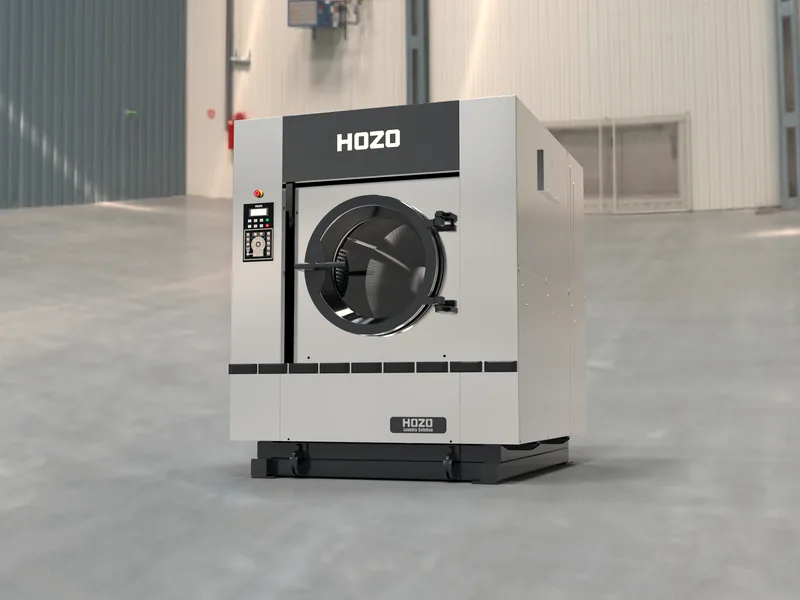
Steam use depends on machine type and size. The figures below are the actual running consumption of HOZO machines at 0.4 to 0.6 MPa inlet pressure, taken from our standard energy table. Other manufacturers’ machines of the same capacity will be in a similar range, so the table is a reasonable starting point for any plant.
| Machine | Steam use (kg/h) |
|---|---|
| Washer extractor, 30 kg | 20 |
| Washer extractor, 50 kg | 35 |
| Washer extractor, 100 kg | 68 |
| Washer extractor, 120 kg | 85 |
| Barrier washer extractor, 50 kg | 35 |
| Barrier washer extractor, 100 kg | 55 |
| Tumble dryer, 30 kg | 40 to 60 |
| Tumble dryer, 50 kg | 60 to 80 |
| Tumble dryer, 100 kg | 90 to 120 |
| Flatwork ironer, 3.3 m, per heated roll | about 100 (a 3-roll ironer uses about 300) |
| Pillowcase ironer, 1.4 m | 160 to 180 |
The ironer is the biggest single consumer: a 3.3 m flatwork ironer with three heated rolls uses as much steam as four or five 100 kg washer extractors. Tumble dryers come next, because drying means evaporating the water, which takes far more heat than warming it. Washer extractors draw steam only while they heat the bath, so their hourly figure is an average over a cycle in which the demand comes in short bursts.
A worked example: 1.5 tonnes of hospital linen per day
This configuration comes from a HOZO project plan for a hospital laundry handling about 1,500 kg of linen a day, with barrier washer extractors on the soiled side.
| Machine | Qty | Steam each (kg/h) | Steam total (kg/h) |
|---|---|---|---|
| 100 kg barrier washer extractor | 2 | 55 | 110 |
| 50 kg barrier washer extractor | 3 | 35 | 105 |
| 100 kg tumble dryer | 2 | 100 | 200 |
| 50 kg tumble dryer | 3 | 70 | 210 |
| 3-roll flatwork ironer, 3.3 m | 1 | 300 | 300 |
| Total | 925 |
The connected load is about 925 kg of steam per hour. A boiler rated at 1 tonne per hour (1,000 kg/h) covers it, with a small margin.
The washers will rarely all heat at the same moment, so why not buy smaller? Because the margin gets used up elsewhere:
- Morning start-up. A cold ironer, cold pipework and cold dryers all draw heavily in the first half hour, while condensate is still being pushed out of the system.
- Pipe losses. Every metre of steam main loses heat. Uninsulated pipe loses a lot. Laundry engineers in China regularly report 30 m runs of bare steam main, which quietly turn boiler output into a hot workshop.
- Growth. Most laundries add a dryer or a second ironer within a few years. A boiler sized exactly to day one is undersized by year three.
An undersized boiler shows up as falling pressure in the afternoon, ironers that slow down or leave linen damp, and dryers that take longer per load. An oversized boiler wastes fuel at low load and costs more to buy. Size to the connected load plus a modest margin.
What steam pressure do laundry machines need?
HOZO washer extractors, dryers and flatwork ironers are all rated for 0.4 to 0.6 MPa (about 4 to 6 bar) at the machine inlet. The pressure at the boiler has to be higher than this, because pressure drops along the pipework, and ironers perform best at the upper end of their range.
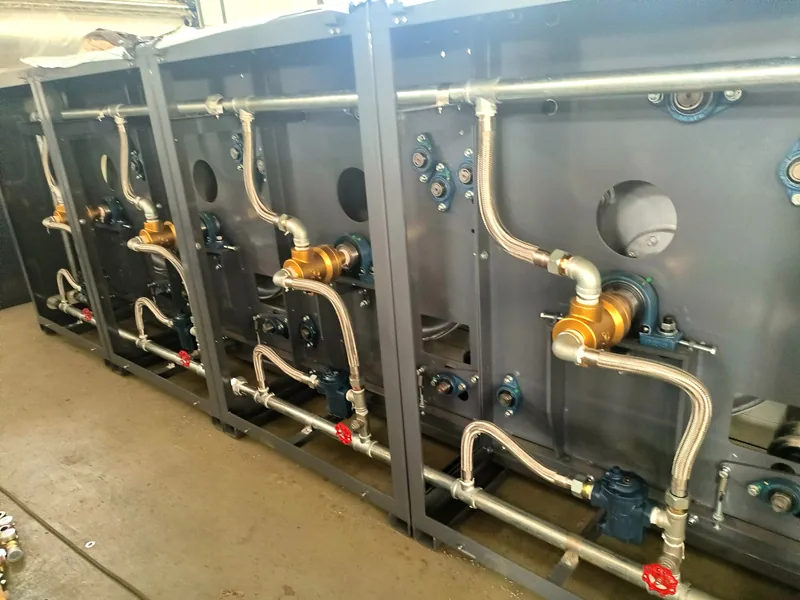
Three points to get right on pressure and safety:
- Feed ironers and dryers on their own branch. Ironers want steady, high pressure; washers draw in bursts. Separate branches, each with its own pressure-reducing valve, stop a washer’s heating step from dragging the ironer’s pressure down.
- If you buy steam from a power plant or industrial park, it often arrives at well over 1 MPa. Reduce it before it reaches the machines. Running at higher pressure than the equipment is rated for is unsafe and does not dry or iron any faster.
- Every ironer needs a working safety relief valve. A heated roll is a pressure vessel. Experienced laundry engineers in China report that a surprising share of ironers in older plants have no functioning relief valve, and serious accidents have resulted. Check this on day one, and on any second-hand ironer.
How do you estimate steam per kilogram of linen?
If you do not yet have a machine list, you can make a rough first estimate from daily throughput. Field figures from hotel-linen laundries in China put whole-plant steam use at roughly 2 kg of steam per kg of linen with conventional equipment. Plants differ by more than a factor of two, depending on residual moisture after extraction, insulation, condensate return and how many cold starts they make.
Use this only to judge the order of magnitude, then size the boiler properly from the machine list above. Two things move the number most:
- Extraction. Linen that leaves the washer wetter costs more steam in the dryer and the ironer. Good extraction leaves bed linen at about 50% residual moisture and towels at 50 to 55%; poor extraction leaves 60% or more.
- Dryer type. On our own machines, the HSG direct-steam dryer uses about 1.0 kg of steam per kg of towels, against about 1.3 kg for the HG model. Across a day’s towels that difference is significant.
Steam piping, traps and condensate return
A boiler of the right size still underperforms if the steam cannot reach the machines cleanly.
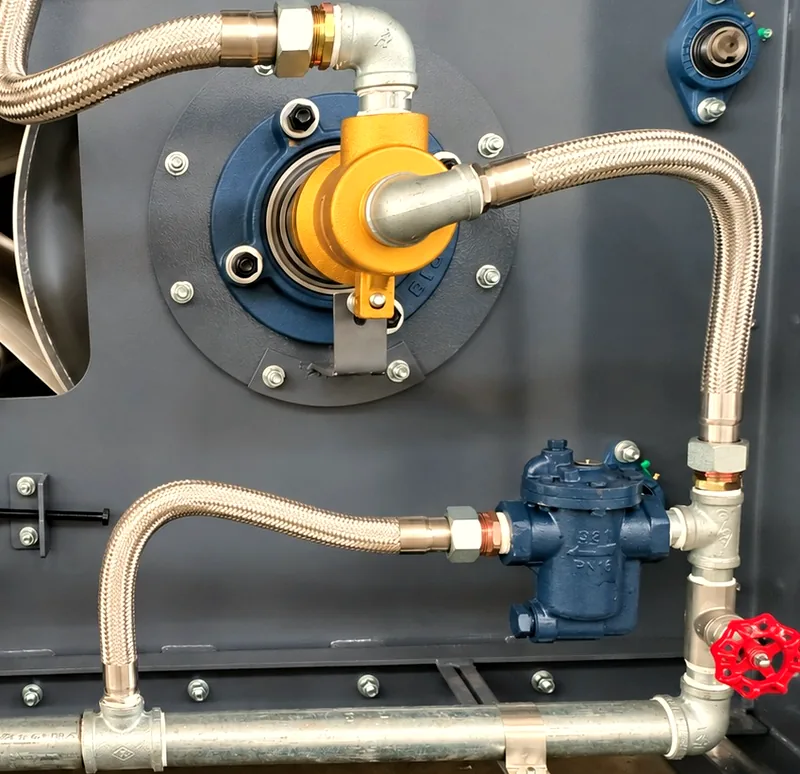
- Slope the steam main in the direction of flow and drain condensate at low points and at the end of each branch.
- Fit a steam trap at every machine outlet. Float-type traps handle the varying loads in a laundry well. Ironers produce a lot of condensate; size their traps generously.
- Insulate everything hot: mains, branches, valves and the condensate line.
- Return condensate to the boiler feed tank. Condensate is hot, already treated water. Returning it saves fuel and water treatment. Plants that report the largest steam savings almost always started with condensate recovery from the ironers.
- Install a separator, pressure gauge and safety valve on the main close to the boiler.
Is it worth having a standby boiler?
For any plant where a stoppage means hospital or hotel linen does not go out, yes. A common approach is to split the capacity: instead of one 4 t/h boiler, install a 3 t/h unit and a 1 t/h unit. The small one carries light loads and keeps the plant running if the main boiler is down for inspection or repair. Plants that buy steam from an outside supplier often keep a small boiler for the same reason.
Fuel, permits and safety
- Fuel. Natural gas is the default choice for new plants in most cities, because it is clean and easy to permit. Biomass pellets are cheaper per tonne of steam in some regions but need storage, ash handling and a clear local permit. Coal and heavy oil are banned or being phased out in many places.
- Permits. A fired steam boiler is a registered pressure vessel in most countries. Expect a licensed installer, an inspection before commissioning and an operating certificate. Ask your local authority about emissions limits before you choose a fuel.
- Small sites. Where a full boiler room is not possible, a compact steam generator can serve a small plant, provided its output covers the connected load.
No room for a boiler: what are the options?
If steam is not possible, choose machines that carry their own heat:
- Gas-heated tumble dryers. Our HG dryers are available with LPG or natural gas burners, using about 2.5 to 6 m³ of gas per hour depending on size. HSG energy-saving dryers come in steam and gas versions only.
- Gas-heated flatwork ironers. Gas versions of our 3.3 m ironers burn about 6 m³/h per heated roll. Our pillowcase ironing line is also available with gas heating.
- Electric heating suits small washer extractors and small dryers. On large machines it becomes expensive to run, and our 5- and 6-roll ironers are not offered with electric heating at all.
A mixed plant is common: gas dryers and a gas ironer, with washers heated by a small boiler or a hot-water system.
If you send us your machine list, or just your daily volume in kilograms and the type of linen, our engineers will work out the steam demand and the boiler size for you. Contact us here.
Boiler sizing FAQ
What size boiler do I need for a hotel laundry?
Add up the hourly steam use of every steam-heated machine (see the table above) and add a margin for start-up and pipe losses. A plant washing about 1.5 tonnes of linen a day typically needs around 1 tonne of steam per hour.
What steam pressure does a flatwork ironer need?
Our ironers are rated for 0.4 to 0.6 MPa at the inlet. Set the boiler higher to cover pipe losses, and reduce pressure on each branch rather than running machines above their rating.
Can I run a laundry without a boiler?
Yes. Choose gas-heated dryers and ironers, and electric or hot-water heating for small washers. Large plants usually still find steam cheaper overall.
How much steam does a 100 kg tumble dryer use?
A HOZO HG-100 dryer uses about 90 to 120 kg of steam per hour. The HSG-100 direct-steam dryer uses about a quarter less steam per kilogram of towels.
Do I need a standby boiler?
If your customers cannot wait for linen, yes. Splitting capacity into a large and a small boiler gives you a backup and better efficiency at light load.
About the Author: HOZO Engineering Team, with 30+ years of industrial laundry equipment manufacturing experience. HOZO is an industrial laundry equipment manufacturer in Shanghai, China, building washer extractors, tumble dryers, flatwork ironers and finishing equipment for laundries in more than 80 countries.